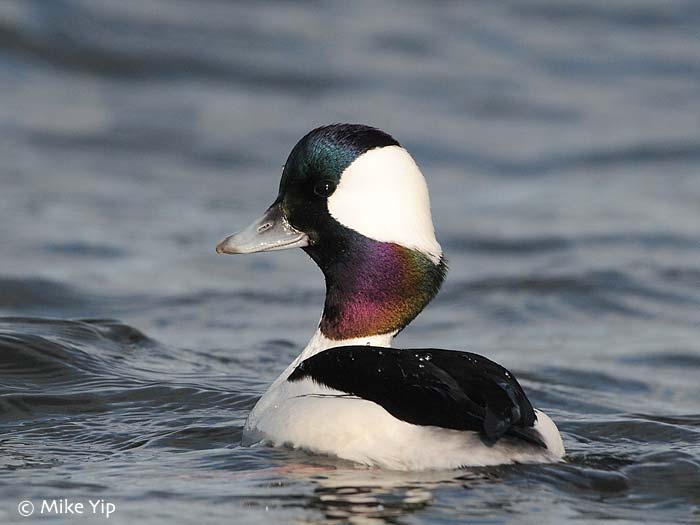
The Buffleheads (Bucephala albeola) may be the smallest ducks in North America, but they are the favorites of many bird lovers. Because of their petite size and elaborate courtship displays, they are always fun to watch. Whenever I see them in freshwater ponds or the shallow coastal waters, I always think of the little rubber duckies that youngsters enjoy playing with in the bathtub. Just how small are they? Just think of how small you need to be to nest in the tree cavity of a Northern Flicker. The Buffleheads are slightly larger than the flicker but can squeeze into the 3 inch opening that the flickers use.
What Does a Bufflehead Look Like?
The bright white male Bufflehead will be the first to catch your attention. It is mostly white except for the iridescent purple and green head and a black back. The head colour is interrupted by a large white wedge on the back. Like many other duck species, the female is mostly brown except for a white cheek patch. Both ducks have the characteristic large head similar to a buffalo which is the origin of “buffle.”

During the winter, Buffleheads occur along the Pacific and Atlantic coasts and throughout most of the United States into Mexico. The summer breeding range extends from B.C. east to Ontario and north to Alaska. Unused Northern Flicker holes are the favorite nesting cavities. The females lay from 4 to 17 eggs and incubate and raise the ducklings on her own. Interior lakes and ponds are used for rearing the young until the cold weather forces them south.
In the early 20th century Bufflehead populations were significantly reduced by extensive hunting. However, their populations have rebounded nicely since 1955.
About the Contributor:
Mike Yip is a Vancouver Island photographer who has published two very successful books on birds and has just released his third. View more of his bird images on his website Vancouver Island Birds.



1 thought on “The Littlest Duck”